People Who Use Drugs Should Lead Overdose Response Strategy
Community knowledge deserves real decision-making power, backed by paid living-wage roles, reliable supplies, and compassionate support.
Taylor Golden
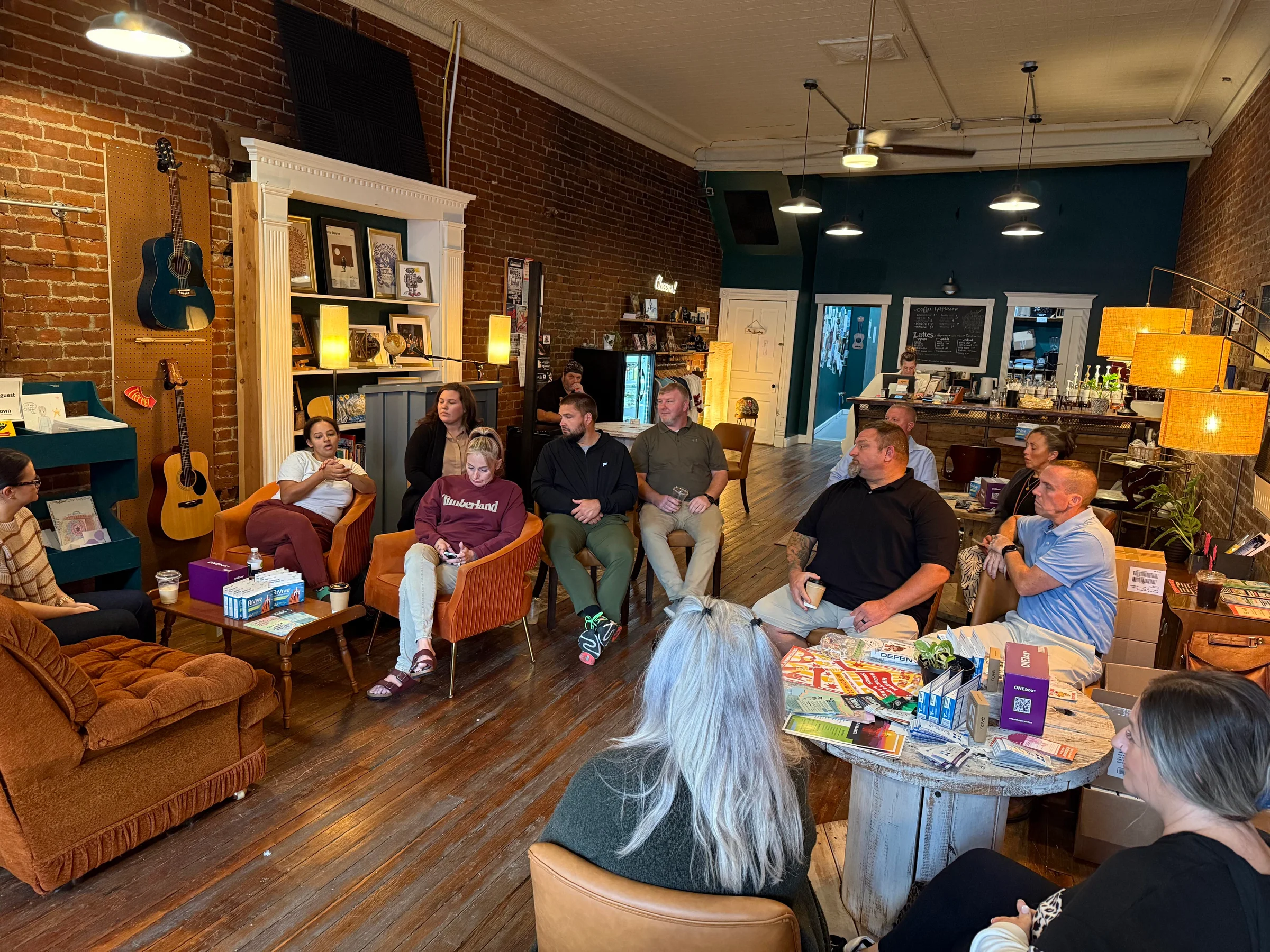
Does a person who uses drugs and works to keep their neighbors alive deserve a paycheck?
My answer is absolutely. They also deserve a meaningful say in how that work happens. People who use drugs should hold real decision-making power over overdose response strategies, including where naloxone goes, how training works, and what support responders receive.
I’ve worked in and around the recovery space for twelve years and in harm reduction for eight. It’s been the privilege of a lifetime to learn from communities all over the country about their own local responses to multidimensional poverty, homelessness, and fatal overdose. Across each of these domains, I noticed a common thread: if you’re serious about engaging an issue effectively, leveraging lived experience is often the missing ingredient, the secret sauce, to solution-building.
In those stuffy board rooms and fuzzy Zoom calls alike, rarely did the best, "aha!" moments or perspective-shifting ideas come from the folk with the most professional alphabet-soup-letters before or after their names. I say that as a cowbell-playing hillbilly (student) who has spent plenty of time learning from far better pickers (teachers) in the proverbial jam band. Some of those pickers have professional credentials. Some have years of experience keeping their friends and neighbors alive. What is special about my field of work is that those categories are not mutually exclusive.
From rural hollers to crowded city neighborhoods, people who use drugs, harm reduction peers, and people in recovery have brought practical ideas into rooms where nobody else had thought of them. In my own experience, time and time again, people who use drugs and their peers consistently bring common-sense, high-impact, low-cost solutions to the conversation. And challenged preconceptions. Much of the insight I’ve encountered came from safety networks operating outside conventional public-health systems, sometimes under threat of losing housing, income, freedom, or access to care.
One of the largest implicit myths when we exclude people who use drugs and peers in recovery from how to address overdose is that being at risk of an overdose somehow makes someone unqualified to prevent one. The reality is the opposite: more often than not, it is people who use drugs and their peers who are more likely to respond to an overdose. Those of us who have supported underground syringe services have seen this firsthand. Bryan Stevenson, the author of Just Mercy, quotes his wise mamaw when he says, “The important things can’t be understood from a distance. You have to get close.” (New York University School of Law, 2014).
My experience working in solidarity with people who use drugs has led me to appreciating the value that these folk can offer our program design. In 2026, I’m seeing more boards and organizations ask for lived experience in their applications. That is heartening. We should also always keep in mind that inviting someone to tell their story is different from giving them the authority to make or change a decision.
Experience does not automatically supply every skill needed, of course. For example: I use a drug called caffeine. I love a good cup of coffee. But drinking coffee does not qualify me to run a coffee shop. You might get a better cup from a black bear on roller skates than from me behind the counter.
Nor does it mean that only folk with lived experience can chart a better course for communities responding to overdose. A long voyage needs someone who knows the ocean, someone who can handle the sails, someone who can maintain the vessel, and someone who can keep the crew healthy and fed. People who use drugs, their families, recovery peers, clinicians, outreach workers, and policy experts all have something to contribute to the conversation. Foundational to the philosophy of Harm Reduction, in this hillbilly’s humble opinion, is the openness to building longer tables instead of higher walls.
To me, the point is to recognize relevant knowledge wherever you can and put it to work alongside other expertise, where the sum of the whole is more impactful than any of the individual parts working in silos. Ray Dalio has a principle called 1+1=3 that illustrates this perfectly.
“Two people who collaborate well will be about three times as effective as each of them operating independently, because each will see what the other might miss- plus they can leverage each other's strengths while holding each other accountable to higher standards.” (Principles, Ray Dalio)
To me, the hardworking nonprofit organization Never Use Alone embodies this work. They leverage the best of both real people and modern technology to keep callers using drugs alive. The peer-run overdose response line says explicitly that “abstinence isn’t a requirement for volunteering with us.” Some operators currently use drugs, others do not. Current drug use is not treated as an automatic disqualification from helping someone else survive, and the organization is all-the-better for having the insight of people who use drugs. (Never Use Alone, 2026)
Whether Systemic or Street-Level, Peers and PWUD Enrich Our Ecosystem of Solutions
An address on a naloxone distribution map tells a planner where supplies sit. It does not, by itself, tell whether people who would most need naloxone can get there, feel welcome, or obtain enough to share safely. Those are questions a distribution strategy has to answer if it wants to make the impact that stakeholders and taxpayers both deserve.
Harm Reduction Ohio is a nonprofit organization made up of personal heroes of mine, they have been supporting a statewide naloxone distribution program for years that has grown to become the largest in Ohio. Reporting on their 2022 distribution work, Harm Reduction Ohio explicitly thanked people who use drugs and their loved ones with getting naloxone “that final few feet, the hardest part of the supply chain.” A county plan should account for that work, not stop at the number of naloxone doses allocated. I am convinced that 1,000 doses of naloxone distributed in a targeted way and informed by people who use drugs would outperform 10,000 doses stuck in supply closets due to abstract strategy divorced from street-level realities. (Harm Reduction Ohio, 2026)
In 2022, researchers interviewed 29 participants in an overdose education and naloxone program in Appalachian Kentucky. Fourteen reported recently administering program-provided naloxone to someone else. Some described becoming known locally as people who carried naloxone and could help during an overdose, “heroes of the hollers” as I like to call them in my part of Central Appalachia. The study, published in 2023, also documented gaps in knowledge and fear of police attention alongside that work, meaning we have work to do in supporting and safeguarding the positive contributions people who use drugs can make to our collective public health. (Kesich et al., 2023)
These interviews do not establish how every Appalachian community should organize its response. Every community will know their own needs and how to build from their own strengths better than anyone outside of it will. What the interviews do establish, however, is starting with the people already doing the work, asking what gets in their way, and funding the training, supplies, and support they need.
Luckily, there is plenty to learn both in and beyond the hollers on this issue. A study developed with the New Jersey Harm Reduction Coalition interviewed 30 people who used drugs, distributed naloxone, or both in Newark and New Brunswick in 2022. Participants described sharing supplies through personal networks, sometimes despite little engagement with formal overdose programs. They wanted naloxone in everyday locations and training that addressed the emotions of responding and the experience of waking up after an overdose. Leveraging lived experience in program design can empower us to provide more responsive, trauma-informed support to our neighbors experiencing overdose. (Enich et al., (2023))
These findings are specific to the settings they cover. We still have so much to learn and understand about trauma-informed overdose response. But examples like these reveal practical knowledge about access and care that a count of distributed kits, a partial metric we too-often treat as success alone, cannot capture. The lesson I take from what I have read and from my own direct experience working in this space is to involve people who use drugs and peers in recovery before defining your S.M.A.R.T. goals, selecting locations, or finishing training materials. While there is still something meaningful to decide, not just to check a diversity box for a grant application.
Local knowledge is not infallible, and no community speaks with one voice. Still, people living with a problem know things an outside planner cannot learn from a spreadsheet or a half-baked ChatGPT query. I say let a thousand locally informed approaches bloom, then learn honestly from what happens.
Communities are not interchangeable, but their solutions sometimes rhyme. Some of the best storytellers and program designers I’ve known are people whose expertise would never fit neatly into a résumé. People who use drugs will know their own needs better than anyone else. They’re the best poets, storytellers, and program designers I’ve personally known.
Evidence Suggests Trust is Essential, Peers and PWUD Build it Organically
At the Harm Reduction Ohio conference in 2025, I remember OnPoint NYC’s Executive Director Sam Rivera shaking the frost off of a crowd still reeling from recent budget cuts by reminding us that Harm Reduction isn’t going anywhere. People who use drugs and their loved ones have been engaging in the verb harm reduction for at least decades. Way before it was “cool” or “punk rock” and definitely before it was funded (let alone, legal). Limitations breed creativity, and this is a movement made up of hardworking, innovative underdogs who thrive when counted out. For years now, I have watched people improvise, organize, and look after one another without waiting for institutional permission. Choosing not to leverage the wisdom of people who use drugs and their networks of support in our overdose response strategy is doing ourselves a disservice.
The documented history of community naloxone response supports taking that work seriously. In a national survey published in 2015, 68 naloxone-distributing organizations reported information about laypeople who had administered naloxone in 2013. They characterized 82.8% of those responders as people who use drugs. These were program reports and estimates, not independently confirmed accounts of every rescue in the country; professional first-responder organizations were excluded (Wheeler et al., 2015).
Earning the trust of people who use drugs and our neighbors in recovery is, in my own experience, paramount to building programs people will actually use. Given the emerging links between trauma and some forms of drug use, I’ve been really moved by Dr. Paul Conti’s work in trauma recovery. One of the core predictors of successful trauma recovery involves developing agency, the sense that a person can influence their own life rather than only endure what happens to them. Empowering peers as real responders and service providers instead of mere participants and “victims” seems like it could be fruitful on multiple, compounding levels. And given the shared trauma that the overdose epidemic has had across different people of nearly all communities, shared solutions that involve more voices could be an opportunity for connection and solidarity. (Dr. Paul Conti, 2026)
Of course, evidence of effective response is not a head-to-head test of who should control a program’s budget. The case for leadership combines that evidence with the practical knowledge communities bring to program design. Peer leadership should work alongside clinical, logistical, and public-health expertise, with training and accountability appropriate to each role.
Pay Peers and PWUD Livable Wages if You Want Life-Saving Outcomes
Leadership becomes real when it comes with paid, living-wage work and the ability to change decisions. To give an example of how this could look: a rural health department could create paid roles for people currently using drugs, with defined authority over distribution priorities, training content, and evaluation. Program leaders should be able to explain which decisions those participants can make, rather than merely which meetings they can attend.
OnPoint NYC opened the first two publicly recognized overdose prevention centers in the United States on November 30, 2021, building off the decades of underground overdose response work that communities have been engaging in for years. They not only employ people who use drugs, but they also center their voices when developing policy and programming. They offer a concrete starting point for organizations and institutions considering what inclusion should mean: employment and a real role in shaping the work, not just unpaid testimonials. (OnPoint NYC, 2026)
SafeSpot is another truly remarkable organization that comes to mind. The peer-led overdose hotline reports that it moved its volunteer operator team into paid roles in April 2024, compensating operators for calls, training, and supervision. Their model weaves together lived experience, recognized as the skilled work it should be, with resources behind the responsibility. (SafeSpot, 2026)
Research is also starting to support the feasibility of paying people who use drugs to distribute naloxone through their networks. A 2024 evaluation described two Massachusetts programs operating within established organizations and using publicly supplied naloxone. It documented implementation, not a measured reduction in deaths or a financial return on investment. (Lewis et al., 2024)
Examples like these support investment in peer work, not an assumption that peer networks operate without infrastructure. Funders should budget for reliable supplies, outreach expenses, supervision, and living-wage compensation. Planning and relationship-building are real work and should be paid as such, even when they do not immediately produce another recorded KPI or distribution outcome.
Trauma can have a residual quality to it: while the work is important, there is also a cost to being the person everyone relies on. In British Columbia, community-based research using peer-led focus groups and a survey documented financial insecurity, lack of recognition, and repeated exposure to death and trauma among overdose response workers with drug-use experience. These findings describe those workers’ circumstances; they warn against treating community commitment as an unlimited resource. (Mamdani et al., 2021)
Peer leadership should therefore include access to support after difficult events, backup, and the ability to step away. Participation must be voluntary. Current drug use should not exclude someone from helping shape safety, nobody should have to disclose painful experiences to prove their value, and one person should never be expected to represent an entire community.
These Same Standards Apply at R3
At Rapid Risk Reduction, we sell ONEbox®, an AED-like overdose response system that builds off the importance of on-demand education and training. That gives us a commercial interest in this discussion and a responsibility to apply the same standards to our own work.
We are committed to improving ONEbox with input from people who use drugs, people in recovery, their loved ones, frontline professionals, and subject-matter experts. We want it to contribute to a wider network of effective responses, not displace other approaches or be treated as a complete solution.
Our commitment is to the goal of preventing fatal overdose, not to keeping a particular product unchanged. Evidence supporting community naloxone programs should not be presented as proof that our product produces the same outcomes. If studying our work shows that we should build differently, or support a more useful approach, we will eagerly evolve. Because the needs of the folk most at-risk in our communities are ever-changing. So too, must be our solutions.
R3 is actively developing improvements to ONEbox, and we welcome perspectives from people actively using drugs as well as people working in spaces like public health, recovery, and other social safety net services. That invitation will carry the same expectations described here: clarity about what people can influence, respect for their privacy, and compensation for substantial design and advisory work. If you’re interested in supporting us, we would love to hear from you.
People who use drugs should not have to stop using drugs before their knowledge counts. Nor should they have to keep saving lives for free to earn a say. Give them meaningful agency and authority, pay living wages for their work, and make sure institutions are accountable to carrying their share of the responsibility. We build better risk reduction systems when we meet people where they are and do not leave them there.
Citations & Sources
- Dalio, R. (n.d.). 1+1=3. Principles. https://www.principles.com/principles/a31ee726-5264-4ffe-9ad6-8bf7485cd236/
- Enich, M., Flumo, R., Campos, S., Flores, N., Sullivan, N., Mellor, J., O’Neill, C., & Nyaku, A. N. (2023). Overdose education and naloxone distribution program design informed by people who use drugs and naloxone distributors. Preventive Medicine Reports, 35, Article 102374. https://doi.org/10.1016/j.pmedr.2023.102374
- Harm Reduction Ohio. (2023, January 2). Harm Reduction Ohio distributes record numbers of naloxone kits in 2022. https://www.harmreductionohio.org/harm-reduction-ohio-distributes-record-numbers-of-naloxone-kits-in-2022/
- Huberman, A. (Host). (2023, September 6). Guest series | Dr. Paul Conti: How to understand & assess your mental health [Audio podcast episode]. In Huberman Lab. Scicomm Media. https://www.hubermanlab.com/episode/guest-series-dr-paul-conti-how-to-understand-and-assess-your-mental-health
- Kesich, Z., Ibragimov, U., Komro, K., Lane, K., Livingston, M., Young, A., & Cooper, H. L. F. (2023). “I’m not going to lay back and watch somebody die”: A qualitative study of how people who use drugs’ naloxone experiences are shaped by rural risk environment and overdose education/naloxone distribution intervention. Harm Reduction Journal, 20(1), Article 166. https://doi.org/10.1186/s12954-023-00900-z
- Lewis, N. M., Smeltzer, R. P., Baker, T. J., Sahovey, A. C., Baez, J., Hensel, E., Poole, B., Stewart, C., Cogan, A. G., Bullard, M., & Taylor, J. L. (2024). Feasibility of paying people who use drugs cash to distribute naloxone within their networks. Harm Reduction Journal, 21(1), Article 42. https://doi.org/10.1186/s12954-024-00947-6
- Mamdani, Z., McKenzie, S., Pauly, B., Cameron, F., Conway-Brown, J., Edwards, D., Howell, A., Scott, T., Seguin, R., Woodrow, P., & Buxton, J. A. (2021). “Running myself ragged”: Stressors faced by peer workers in overdose response settings. Harm Reduction Journal, 18(1), Article 18. https://doi.org/10.1186/s12954-020-00449-1
- Never Use Alone. (n.d.). Frequently asked questions. https://neverusealone.com/faq-2/
- New York City Department of Health and Mental Hygiene. (2022, April 14). Overdose continues to rise in NYC as harm reduction programming scales up [Press release]. https://www.nyc.gov/site/doh/about/press/pr2022/overdose-increases-as-harm-reduction-program-scales-up.page
- New York University School of Law. (2014, October 27). On justice, and mercy: Bryan Stevenson delves into the causes and ills of mass incarceration and racial injustice, but sees hope in America’s future. https://www.law.nyu.edu/news/ideas/Bryan-Stevenson-Q-and-A-Just-Mercy
- OnPoint NYC. (n.d.). Team. https://onpointnyc.org/team/
- SafeSpot. (n.d.). About us. https://safe-spot.me/about-us/
- Substance Abuse and Mental Health Services Administration. (2014). SAMHSA’s concept of trauma and guidance for a trauma-informed approach (HHS Publication No. SMA 14-4884). https://mivan.org/wp-content/uploads/2026/01/samhsatraumaconcept_paper.pdf
- Wheeler, E., Jones, T. S., Gilbert, M. K., & Davidson, P. J. (2015). Opioid overdose prevention programs providing naloxone to laypersons – United States, 2014. Morbidity and Mortality Weekly Report, 64(23), 631–635. https://www.cdc.gov/mmwr/preview/mmwrhtml/mm6423a2.htm