ONEbox® for re-entry
Overdose prevention at the point of release. Give people leaving county custody the tools and confidence to respond to an opioid overdose.
Run out of the jail, paid for with opioid-abatement money the county already has. Already implemented in Oldham County, Kentucky on July 22, 2026.







Why Re-entry
The moment after release matters.
For people at risk of opioid overdose, the weeks right after release can be especially dangerous. They are also the one time a county knows exactly who is walking out the door. The ONEbox® Re-entry Program sends a person home with an overdose-response kit and the instructions for using it.
“Recovery begins with opportunity.”
Funding
Use existing opioid-abatement resources to put overdose-response tools into the hands of people leaving jail.
Funded through existing resources
Opioid-abatement and settlement dollars the county already controls.
Directed by county officials
In Oldham County, the Judge/Executive and the county's Opioid Abatement Commission decided where it went.
No new general-fund request
Where eligible opioid-abatement funds are available, the program does not require a new general-fund appropriation.
Opioid-abatement funding availability and allowable uses vary by state and county. Our team will help you understand the process and identify the appropriate funding pathway.
The Proof Case
Oldham County did it.
A real county. A real jail. A real re-entry program. Oldham County, Kentucky became the first jail in the state to provide ONEbox® kits. It is the model we walk every county through.
“Recovery begins with hope, and hope begins with keeping people alive.”
July 22, 2026
A launch at the detention center
Kentucky Attorney General Russell Coleman joined Oldham County Jailer Jeff Tindall, County Judge/Executive David Voegele, and the Healthy Oldham County Coalition to unveil the program at the Oldham County Detention Center in La Grange.
First in Kentucky
A jail-based distribution point
Oldham County became the first jail in Kentucky to provide ONEbox® kits, making them available to people being released and to visitors at the facility.
$65,000
Existing opioid-abatement dollars
The county purchased the kits using opioid-abatement funds distributed directly to Oldham County. Judge/Executive Voegele chairs the county's Opioid Abatement Commission.
30 kits
Available on day one
Thirty kits were on hand at the jail the day the program was announced, with the county health department already distributing kits at community locations.
The Kentucky Attorney General's Office participated in and publicly documented the Oldham County launch, and the program was covered by local news outlets including WLKY. That participation describes the Oldham County program; it is not an endorsement of the national ONEbox® Re-entry Program.
The Model
What Oldham County did
How the money got from the county's abatement allocation to a person walking out of the jail. No two counties are set up the same way. What carries over is the order these steps come in.
- 01
Existing opioid-abatement funds
Dollars already designated to address the opioid crisis, distributed directly to the county.
- 02
County leadership
The Judge/Executive and the county's Opioid Abatement Commission directed the allocation.
- 03
Detention center
The jail became the distribution point.
- 04
ONEbox® + naloxone
Kits purchased with abatement funds. Naloxone is supplied separately and stocked by the county.
- 05
Releasees + visitors
Kits made available to people leaving custody and to visitors at the facility.
- 06
Community
The kit goes home with the person.
The Program
A simple program for county jails.
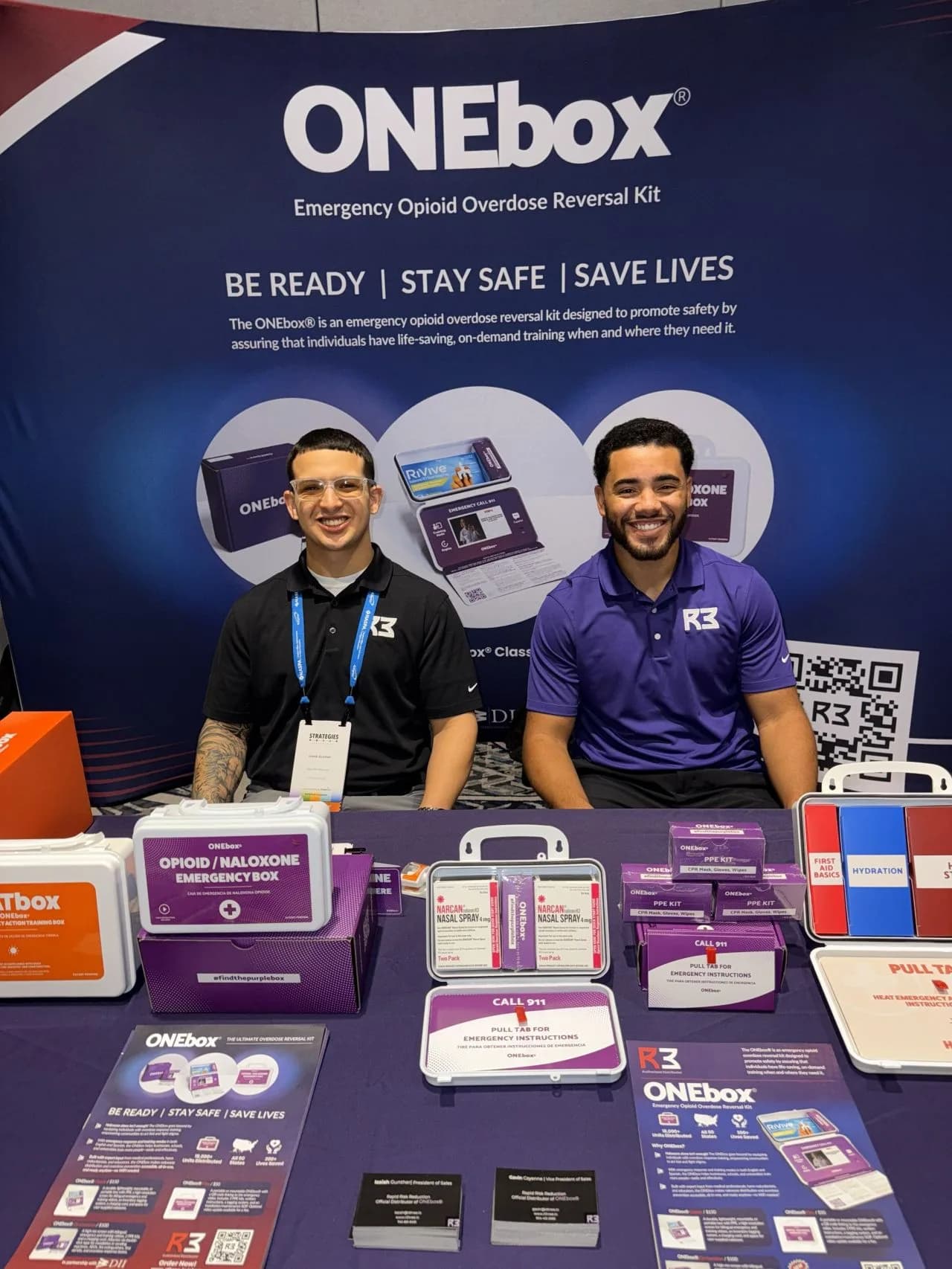
Most of the work falls to staff you already have. Four operating elements run the program end to end.
- The elements
- Identify
- Prepare
- Distribute
- Measure
Your jail leadership sets the criteria; boxes and naloxone stay stocked where releases are processed; distribution is recorded and reported to your opioid-abatement authority.
The Resource
Built for someone with no training.
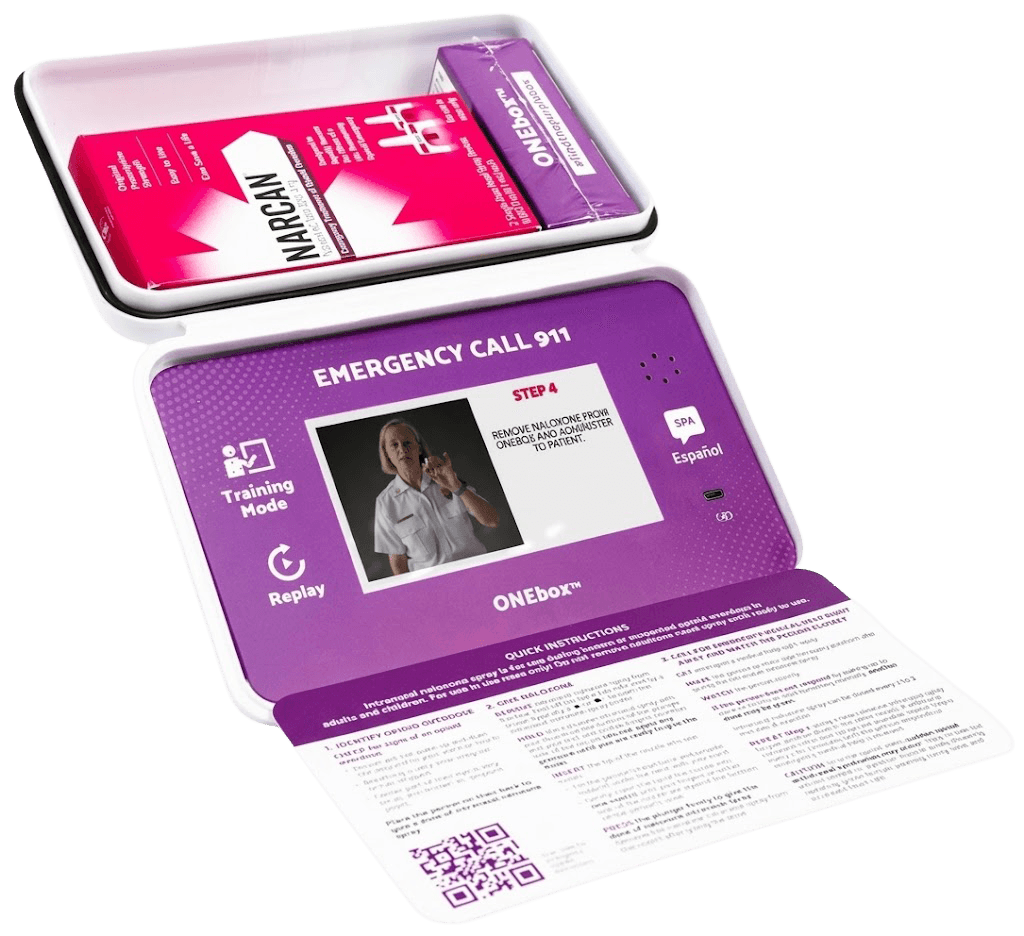
A ONEbox® walks any bystander through an overdose response on-screen, step by step, in English and Spanish.
- In the box
- Bilingual video guidance
- Written instructions
- 3 complete PPE kits
- Secure naloxone storage
Naloxone is supplied separately. In this program the county puts it in before the box leaves the building.
ONEbox® Classic
Wall-mounted or portable, with the built-in bilingual video screen. The standard format for a shared space.
View productONEbox® Colocation
A compact adhesive-mount unit that goes in or next to existing equipment, such as an AED cabinet.
View productTrack Record
ONEbox® is already in use in communities, on campuses, and in public spaces across the country.
- 40,000+
- Units distributed
- 50
- States
- 1,000+
- Partner organizations
Working Together
We'll show you how.
You do not have to figure this out alone.
Five steps from first call to first handoff.
We walk your county through the same path Oldham County took, at your pace, with your team.
Start with a conversation- 01
Talk. Meet with our team and tell us about your jail and your release process.
- 02
 oldham-county.walkthrough
Understand. We walk you through what Oldham County did and what it took.
- 03
Fund. We help you understand how existing opioid-abatement resources may fit, and who in your county decides.
- 04
Implement. We work with your team on how a box gets handed over at release and how that gets recorded.
- 05
Launch. Hand out the first ONEbox® units at release.
Demonstration
See the ONEbox® for yourself.
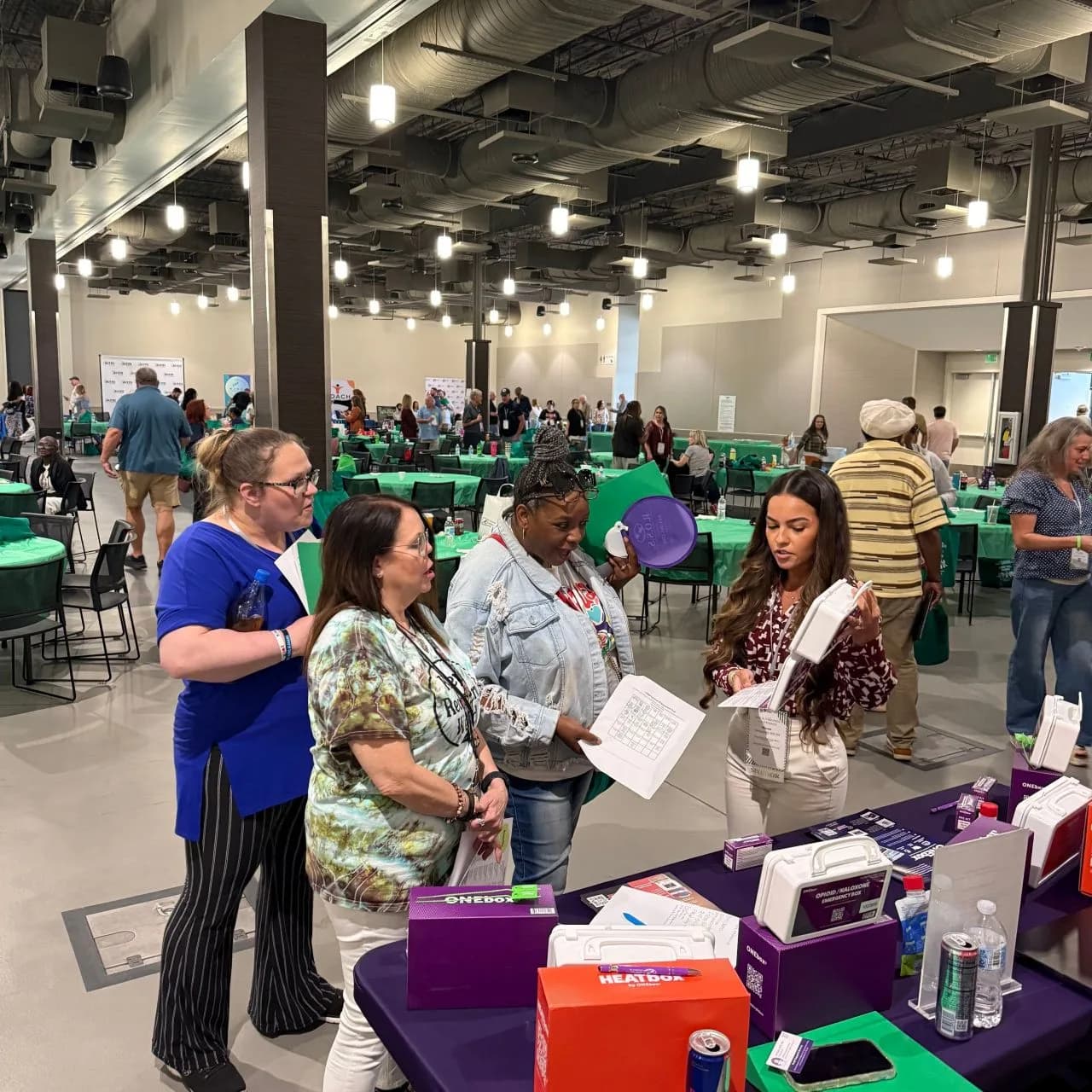
We can send a demonstration ONEbox® to your office and meet with your jail leadership.
- What's covered
- What is inside a ONEbox®
- How someone with no training uses it
- Where your naloxone would come from
- What Oldham County paid, and who approved it
Questions
Common questions from county officials.
What is the ONEbox® Re-entry Program?
It is a county jail-based program. People leaving custody get an overdose-response kit on the way out. A ONEbox® holds the naloxone, plays bilingual video guidance for whoever is standing there, and carries written instructions and PPE. Naloxone is supplied separately, and the county stocks it.
Who is the program for?
County jails and detention centers, and the county officials who work with them: jailers, sheriffs, jail administrators, county executives and judges, public health directors, and whoever directs the county's opioid-abatement or settlement funds. It is built for a county of any size, in any state.
Is this only available in Kentucky?
No. Oldham County was the first jail in Kentucky to do it, and its program is the one we show other counties, but a county in any state can run this. Opioid settlement funds have been directed to state and local governments across the country.
How does opioid-abatement funding fit into the program?
Oldham County purchased its kits with $65,000 in opioid-abatement dollars distributed directly to the county. It did not take a new general-fund appropriation. Funding eligibility and allowable uses vary by state and county; our team can help you identify the appropriate local funding authority to discuss eligibility.
Did a county already implement this?
Yes. Oldham County, Kentucky launched the program at the Oldham County Detention Center on July 22, 2026, becoming the first jail in Kentucky to provide ONEbox® kits. The Kentucky Attorney General's Office publicly documented the launch, and it was covered by local news outlets.
Your county can do this too.
Oldham County did this with money it already had and a jail it already ran. We can help you do the same, including a demonstration ONEbox® sent to your office and a meeting with your jail leadership.
If you believe someone is experiencing an overdose, call 911 immediately. ONEbox® is an emergency response aid and does not replace professional medical care or emergency medical services.
Opioid-abatement funding availability and allowable uses vary by state and county. Nothing on this page is legal, medical, or financial advice. References to Oldham County, Kentucky describe that county's program as publicly documented; they do not indicate endorsement of this program by the Commonwealth of Kentucky or the Kentucky Attorney General's Office.